
INSIGHTS

The Advantages of Improving Your Home’s Passive Thermal Efficiency

When it comes to cutting energy bills and staying comfortable year-round, few upgrades make as much difference as improving your home’s passive thermal efficiency. Instead of relying on your air conditioner or heater to fight against drafts and temperature swings, a thermally efficient home keeps the indoor climate stable — naturally.

Here are some of the key advantages of improving your home’s passive thermal efficiency:

What is passive thermal efficiency?

Passive thermal performance refers to how well your home maintains a comfortable internal temperature without relying heavily on active systems like heating or cooling. It’s about how your building envelope — walls, roof, floors, windows, and doors — work together to trap comfort inside and keep the elements out.

By improving insulation, sealing air leaks, and optimising window glazing, you can create a space that’s naturally energy-efficient, quieter, and healthier to live in.

1. Lower energy bills

A home that leaks air and heat wastes energy every hour of every day. By improving thermal sealing and insulation, your heating and cooling systems don’t need to work as hard – often cutting energy costs by 10–30%. Over time, those savings easily outweigh the cost of the upgrades.

2. Consistent comfort in every room

Poor thermal performance leads to rooms that are hot in summer, cold in winter, and uncomfortable all year. Improving passive thermal efficiency ensures even, stable temperatures throughout the home, reducing drafts and eliminating those frustrating “cold corners” or overheated rooms.

3. Longer life for your HVAC system

When your home holds temperature efficiently, your air conditioning and heating systems don’t cycle on and off as often. Less strain means fewer breakdowns, lower maintenance costs, and a longer system lifespan, saving you even more in the long run.

4. Healthier indoor air quality

Unsealed gaps don’t just leak energy – they let in dust, allergens, and moisture. Improving thermal performance through proper sealing and insulation helps keep pollutants and outdoor allergens out, creating a cleaner, healthier indoor environment.

5. Reduced carbon footprint

Every kilowatt-hour of energy saved means fewer greenhouse gas emissions. By using less electricity and gas for heating and cooling, you’ll reduce your household’s environmental impact and take a practical step toward sustainable living.

6. A quieter, more peaceful home

Insulation and air sealing don’t just stop heat transfer – they also reduce outside noise. A well-sealed, thermally efficient home is noticeably quieter, giving you a calmer and more comfortable living space.

7. Increased property value and energy rating

Homes with high energy ratings are in demand. Improving passive thermal performance enhances your property’s comfort, efficiency, and resale appeal, making it more attractive to future buyers who value sustainability and lower running costs.

How to identify thermal inefficiencies

The most effective way to find out where your home is losing heat or letting in drafts is through a thermal imaging inspection.

Using advanced infrared cameras, we can see the invisible – locating insulation gaps, air leaks, and weak points in your home’s envelope with precision. From there, you’ll receive a clear action plan to fix issues and boost your home’s efficiency.

Why an inspection matters

Your home should comfortable and efficient to heat and cool while being airtight to help manage allergies.

A thermal imaging inspection can identify temperature leakage caused by air gaps and insulation failures that can go undiscovered for years.

Contact us to book your thermal imaging inspection and stay ahead of the seasons – stay warmer in winter, cooler in summer, and save on energy costs all year round.

DRAFTGUARD

Our mission

At DraftGuard, we help homeowners see what the eye can’t. Using advanced thermal imaging cameras, we detect hidden air leaks, missing insulation, and other thermal issues that are reducing the comfort of your home while driving up your energy usage and bills.

AT A GLANCE

Thermal imaging leak detection

At DraftGuard, we help homeowners see what the eye can’t. Using advanced thermal imaging cameras, we detect hidden air leaks, missing insulation, and other thermal issues that reduce comfort and drive up energy costs.

Most homes lose far more energy than their owners realise — in fact, studies show that up to 25–30% of a home’s heating and cooling can be lost through gaps, cracks, and poor insulation. That means higher bills, harder-working heating and cooling systems, and a home that never feels quite right.

We believe in giving homeowners clear, actionable insights so they can make simple improvements that add up to big savings and a more comfortable home.

ADVANCED THERMAL IMAGING TECHNOLOGY

Detection and diagnostic equipment

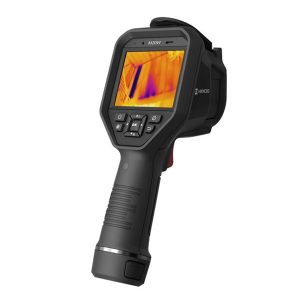
draftguard image hikmicro 0001
Not all thermal cameras are created equal. Inexpensive consumer models often have very low resolution (as little as 80×60 pixels) and poor thermal sensitivity, meaning they only show rough “hot and cold blobs” with little diagnostic value. Temperature readings can also be inaccurate by several degrees – enough to miss or misinterpret real thermal leaks.

We exclusively use the HIKMICRO™ M Series professional thermal cameras, built specifically for assessing and inspecting building diagnostics. Featuring much higher resolution and NETD sensitivity along with more precise temperature accuracy (within ±2 °C or 2%), our professional, industrial-grade thermal cameras reveal fine details like thin air gaps, degraded or missing insulation, or duct leaks that cheaper cameras simply can’t resolve.

This allows us to identify and prioritise issues with confidence rather than guesswork. Beyond clarity and accuracy, the M Series offers advanced tools: multi-spot temperature measurement, isotherm alarms, and onboard reporting. Combined with our AI analysis, this means we don’t just hand you blurry thermal images — we deliver precise, annotated reports that quantify energy loss and prove improvements after fixes.

By choosing DraftGuard, you are accessing industrial-grade accuracy and reporting rather than vague, unreliable snapshots. This helps ensure every leak is found, every recommendation is backed by data, and every dollar you spend on passive thermal improvements to your home is targeted where it counts.

THE INSPECTION PROCESS

What an inspection looks like

Step 1: Inspection

A DraftGuard technician inspects your home for thermal leakage – this includes detailed thermal imaging of common vulnerabilities such as windows, doors and ventilation outlets, as well as scanning for wall and ceiling insulation issues.
Our pre-inspection checks ensure any specific concerns a home owner has are captured and prioritised during the inspection.

Step 2: Reporting

We provide clear and easy-to-understand reports featuring thermal images taken during the inspection which reveal issues unable to be seen without the technology.
Comprehensive diagnosis with descriptions of each fault are included, with interpretation and annotation included with each image captured during the inspection.

Step 3: Actionable solutions

A DraftGuard report lists recommendations of actions for each identified issue that can be carried out by the home owner themselves.
These DIY upgrades are simple to carry out, with cost-effective and readily available materials, ruling out any need to hire expensive labour, leading to substantially increased future savings.

Products
Patents
K
Employees
Countries
Thermal IMAGING INSPECTION

It’s time to start saving on energy costs.

An air leak or insulation issue can significantly impact your energy usage and costs to heat and cool your property.

A DraftGuard thermal imaging inspection is a quick and cost-effective starting point to making impactful improvements to your home or office’s thermal performance.

draftguard header logo 02

If you suspect a leak or experience part of the home always being hot in summer and cold in winter, book a DraftGuard inspection and utilise latest-technology thermal imaging to pinpoint exactly where the thermal weaknesses are.

The sooner a weakness can be identified, the sooner it can be rectified and your energy bills lowered.